

As a business owner, you’ve heard the pitch: “Just plug into the API! Pay per token!” Sounds clean. It sounds scalable. It’s like buying utility power—you only pay for what you use. That’s the General LLM pitch. But if you’re asking about a Domain-Specific Language Model (DSLM), you’ve already rejected that simplicity. You know the simple answer is often the wrong answer. You’re asking the fundamental question: What is the true Total Cost of Ownership (TCO) of building and running an expert system, and how does it compare to simply renting the expertise? This is not a cost comparison; it’s a value comparison.
Do you build a foundational advantage, or do you license a commodity? Renting smart through a General LLM API provides a cost structure that is low, transparent, and immediate. You pay for the input and output tokens. However, when the model hallucinates an answer about your compliance process, you incur the hidden costs of legal risk, employee confusion, or a damaged customer relationship. The API cost is transactional. The cost of inaccuracy is existential. Owning Truth with a DSLM, conversely, entails an upfront cost that is high, complex, and opaque, consisting of infrastructure, specialized personnel, and time, rather than just API tokens. But the payoff is that the model speaks your truth, understands your processes, and delivers a definitive, grounded answer. The cost here is an investment in certainty and competitive differentiation.
A European chocolatier, renowned for its artisanal products and operating across global markets, faced significant operational hurdles rooted in manual processes, dwindling margins, and the disruptive effects of the COVID-19 pandemic. The core challenge was the critical lack of accurate, trustworthy data, which resulted in misaligned sales and demand forecasts, inefficient inventory management plagued by lack of visibility into product expiry dates, and slow decision-making driven by fragmented Excel spreadsheets. To overcome these issues, the company partnered with a digital solutions provider to implement a comprehensive data transformation strategy. The solution focused on establishing a robust master data foundation and creating a Single Source of Truth (SSOT) platform to centralize data from all ERP and planning applications. Crucially, real-time inventory dashboards were developed to give stakeholders end-to-end visibility, and end-to-end operational workflows were automated to reduce manual hand-offs. This digital overhaul delivered tangible business results, including a 20% reduction in decision cycle times due to data-driven insights, a 30% acceleration of re-supply notifications which optimized logistics, and the establishment of five key dashboard groups that provided comprehensive, real-time supply chain visibility. Ultimately, the project enabled the chocolatier to successfully transition to a highly efficient, digitally agile operating model while preserving its commitment to quality.[1]
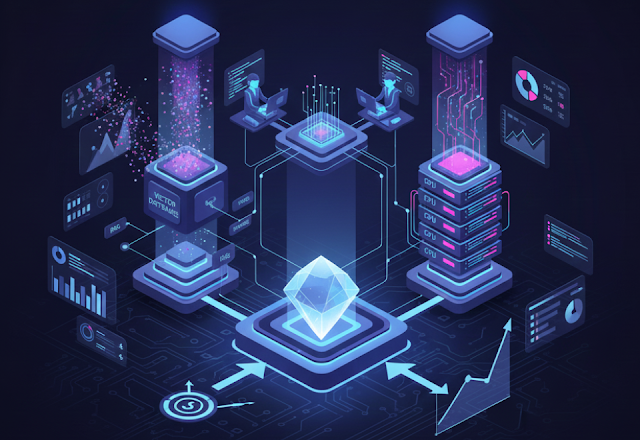
To accurately determine the true Total Cost of Ownership (TCO) for a Domain-Specific Language Model (DSLM), one must look far beyond the simple, per-token price tag advertised by general API providers, as the TCO for a specialized, in-house system rests on three substantial and often-hidden pillars. The first pillar is the Silicon, or Computational Resources, which represents the physical and virtual “metal” required to run a customized LLM. This demands either significant upfront Capital Expenditure (CapEx) for building dedicated GPU clusters (encompassing servers, cooling, and power infrastructure) or ongoing Operational Expenditure (OpEx) for demanding cloud services. However, for organizations anticipating high-volume, continuous usage, the financial calculus shifts dramatically, as owning an efficient, smaller, optimized machine can become exponentially more cost-effective over five years than continuously renting massive virtual resources, potentially generating millions in long-term savings. The second pillar is The Engineers, or Specialized Personnel, where the difference between plug-and-play general LLMs and precision DSLMs becomes most apparent. DSLMs require expensive, highly specialized talent—specifically Data Scientists, ML Engineers, and Data Architects—tasked with selecting the appropriate open-source models, managing the essential vector database for Retrieval-Augmented Generation (RAG), fine-tuning prompts, and ensuring complex system integration; this labor often constitutes a dominating 70-80% of the early deployment TCO, representing the non-negotiable price of gaining complete control over the model’s performance and knowledge base. Finally, the third pillar is The Data Plumbing, involving RAG and Fine-Tuning, which accounts for the critical work of transforming vast reserves of unstructured organizational documents into consumable, actionable knowledge. This entails substantial costs associated with data cleaning, text chunking, embedding generation, and the continuous maintenance of sophisticated data pipelines—a necessary overhead that ensures the model reliably learns the company’s specific voice and strictly adheres to its internal facts, effectively transforming raw internal data into a proprietary, high-value asset. 68% of enterprises that deployed Specialized Language Models (SLMs) reported improved model accuracy and faster ROI compared to those using only general-purpose models. [2]
We shouldn’t talk about the cost of aluminum; we should talk about the feel of the finished product. The ideal for the business owner is to shift the metric entirely. Forget Cost Per API Call. Start measuring Total Cost Per Successful Business Outcome (TCSBO). If a General LLM costs $0.05 per API call but is only right 80% of the time on a high-stakes customer query (costing you $50 per error), your real cost is enormous. If your DSLM costs $0.15 per API call but is right 99.5% of the time, the business cost of the DSLM is a fraction of the general model. You are not buying tokens; you are buying certainty. For many enterprises, the $500k/year API spend threshold is the break-even point. Above this, the initial high TCO of building your own optimized, smaller model with technologies like LoRA fine-tuning and running it on owned or reserved GPUs wins on pure economics. Organizations are moving away from the single, massive model. They are using an AI Gateway to intelligently route simple queries to cheap, fast models (like GPT-4o Mini) and reserving the expensive, specialized DSLM for the 20% of critical queries that truly deliver 80% of the business value. This smart optimization—using semantic caching and prompt compression—allows companies to cut their overall AI bill by 50-70% without sacrificing critical performance. Ultimately, your investment is not in silicon, but in the precision of your internal knowledge. That is an invaluable asset you cannot rent.